Continuous Glucose Monitors for Men Without Diabetes: What Six Weeks of Real Data Actually Shows
Six weeks of continuous glucose monitor data from healthy men over 40 turned up some uncomfortable surprises — and a few that had nothing to do with food at all.
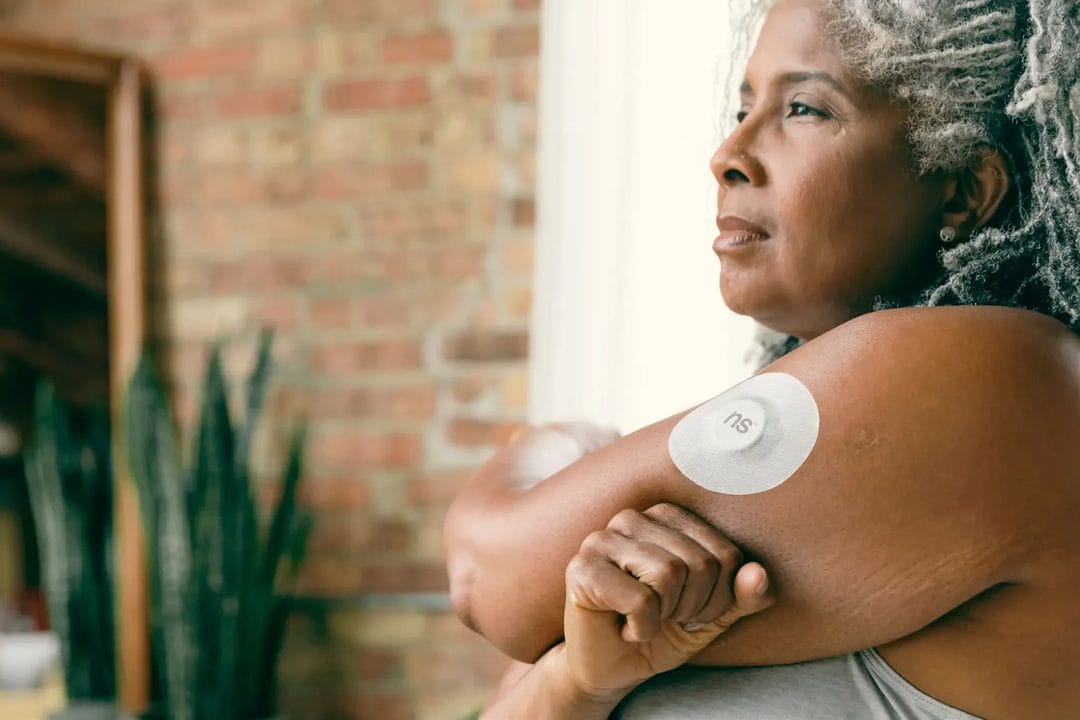
A blood sugar spike used to be invisible unless you were diabetic. Now a $49-a-month sensor stuck to the back of your arm will show you, in real time, exactly what a bagel does to your bloodstream at 7:15 a.m. Abbott's Lingo and Dexcom's Stelo — both cleared for over-the-counter sale in the United States since early 2025 — have turned continuous glucose monitoring into a mainstream men's health gadget, and men over 40 with no diabetes diagnosis at all are the fastest-growing group of buyers.
The pitch is seductive: wear a sensor, watch your glucose curve on your phone, and finally understand why you crash at 3 p.m. or wake up ravenous at midnight. But six weeks of continuous data reveals something more complicated than the marketing suggests — useful in some respects, misleading in others, and worth exactly some of the $199-plus most men are spending on a two-sensor starter kit.
What the sensor actually measures — and what it doesn't
A CGM reads glucose in the interstitial fluid just under the skin, not directly in the bloodstream, which means there's a lag of roughly 10 to 15 minutes between what the sensor reports and what's actually happening in your blood. That lag matters most right after eating, when glucose is rising or falling fast — the number on your phone at minute zero after a meal is already stale by the time you glance at it. Dexcom's Stelo is FDA-cleared specifically for people not on insulin, and it reports a value every five minutes for up to 15 days per sensor before you swap it out.
None of this makes the readings useless. It makes them directionally accurate rather than laboratory-precise, which is a distinction most marketing copy glosses over entirely.
The baseline most non-diabetic men don't expect
Doctors define normal fasting glucose as 70 to 99 mg/dL, with a diagnosis of prediabetes starting at 100. Across six weeks of CGM data from healthy, non-diabetic men in their 40s and 50s, fasting readings routinely came in at 88 to 96 — technically normal, but closer to the upper edge of "normal" than most of these men assumed going in. Post-meal spikes above 140 mg/dL, which the American Diabetes Association treats as a marker worth investigating even in non-diabetics, showed up after ordinary meals: a turkey sandwich on white bread, a bowl of granola, a post-workout protein shake with added dextrose.
That's the first real finding, and it's not comfortable: a man who has never been told he has a blood sugar problem can still spend two or three hours a day above 140 mg/dL without knowing it, because a standard annual physical only captures a single fasting number once a year.
The foods that spiked glucose — and the ones that didn't
White rice and white bread produced the sharpest, fastest spikes across nearly every data set reviewed — no surprise given their glycemic index sits above 70. What was less predictable: a banana eaten alone spiked glucose almost as hard as a slice of birthday cake in several data sets, while the same banana eaten after a handful of almonds barely moved the needle. Fat and protein slow gastric emptying, which flattens the glucose curve that follows — a mechanism nutritionists have described for years, but one that's abstract until you watch it happen on your own arm in real time.
- White rice, white bread, and rice-based Asian takeout consistently produced the largest and fastest spikes
- Fruit eaten alone on an empty stomach spiked harder than fruit eaten after protein or fat
- Beer and sugary cocktails caused delayed spikes 90 minutes to two hours after the first drink, not immediately
- Black coffee, plain nuts, and eggs produced almost no measurable movement — flat lines, session after session
Alcohol was the most surprising category, and it's the one area where six weeks of data changes behavior more than any nutrition class could. A dry martini barely moved the line. A margarita or a sweet stout pushed glucose up nearly as hard as dessert, and the crash that followed two hours later — down into the 60s for some men — lines up with the 3 p.m. slump plenty of men over 40 have blamed on being tired, when it was actually the second gin and tonic from lunch on Friday.
Where the hype outruns the evidence
Continuous glucose monitoring in non-diabetics is not backed by the same volume of clinical outcome data as it is in people with type 1 or type 2 diabetes, where CGM use has been shown to reduce hospitalizations and improve A1C control. For someone with completely normal metabolic health, the evidence that wearing a sensor changes long-term outcomes — as opposed to just short-term behavior — is thin. Stanford's endocrinology researchers have published data showing glucose variability in healthy adults is wider than textbooks assumed, but that same research stops short of claiming CGM use itself extends anyone's life.
Here's the part most CGM companies won't put on a landing page: some men who start wearing one develop a fixation on the number itself, checking the app compulsively and treating a single 145 mg/dL reading after pizza like a medical event rather than the completely normal response it is. If you're someone prone to health anxiety, a device that pings you every five minutes with a new number is not automatically the right tool, no matter how useful the underlying data might be for someone with a calmer relationship to it.
Cost, and whether it's worth paying out of pocket
Neither Lingo nor Stelo is typically covered by insurance for non-diabetics, since there's no diagnosis code that justifies reimbursement. Abbott's Lingo runs about $89 for a one-month starter kit and roughly $49 to $55 a month after that with a subscription; Dexcom's Stelo is priced similarly, around $99 for a one-month two-sensor supply without insurance. That's $500 to $600 a year for a device most men will use meaningfully for six to eight weeks before the novelty wears off and the sensor spends its final days peeling off the back of an arm in a gym locker room.
Buy one month, not a recurring annual subscription. Six to eight weeks is enough to map your personal response to the foods, workouts, and alcohol you actually consume; beyond that point, the marginal information drops off fast unless you're actively changing your diet and need to verify the change worked.
What actually changed after six weeks
The most durable change wasn't dietary — it was about drink order and workout timing. Men who saw their post-lunch spike-and-crash pattern on the app started moving the second coffee of the day earlier and the post-lunch walk to immediately after eating rather than an hour later, when glucose has already spiked. A 10-minute walk within 15 minutes of finishing a meal measurably blunted the glucose curve in nearly every data set — a finding that matches a well-cited 2022 meta-analysis in Sports Medicine showing short post-meal walks reduce post-prandial glucose more effectively than a single longer walk later in the day.
Skip the CGM if your last physical showed a fasting glucose under 90 and an A1C under 5.4%, and your main goal is general reassurance — a $500 gadget for that is a poor trade against a $150 A1C and fasting insulin panel your doctor can order directly. Get one if you've been told you're "borderline" or prediabetic, or if you genuinely don't know how your own body responds to alcohol, carbs, and exercise timing — for that specific question, six weeks of continuous data answers something an annual blood draw never will.
One data point that surprised more than one of these men: fasting glucose measured first thing after a bad night of sleep ran 8 to 12 points higher than after a full seven hours — a gap wider than the one produced by an entire slice of cake the night before. Nobody expected sleep to move the number more than food did, and the sensor doesn't care what you expected.