Home Blood Pressure Monitoring: Why the Pharmacy Cuff, the Clinic Reading and Your Kitchen Table Never Quite Agree
The pharmacy cuff says one thing, the GP's reading says another, and the monitor on your kitchen table says a third. Here's what actually explains the gap — and how to track your numbers so they mean something.
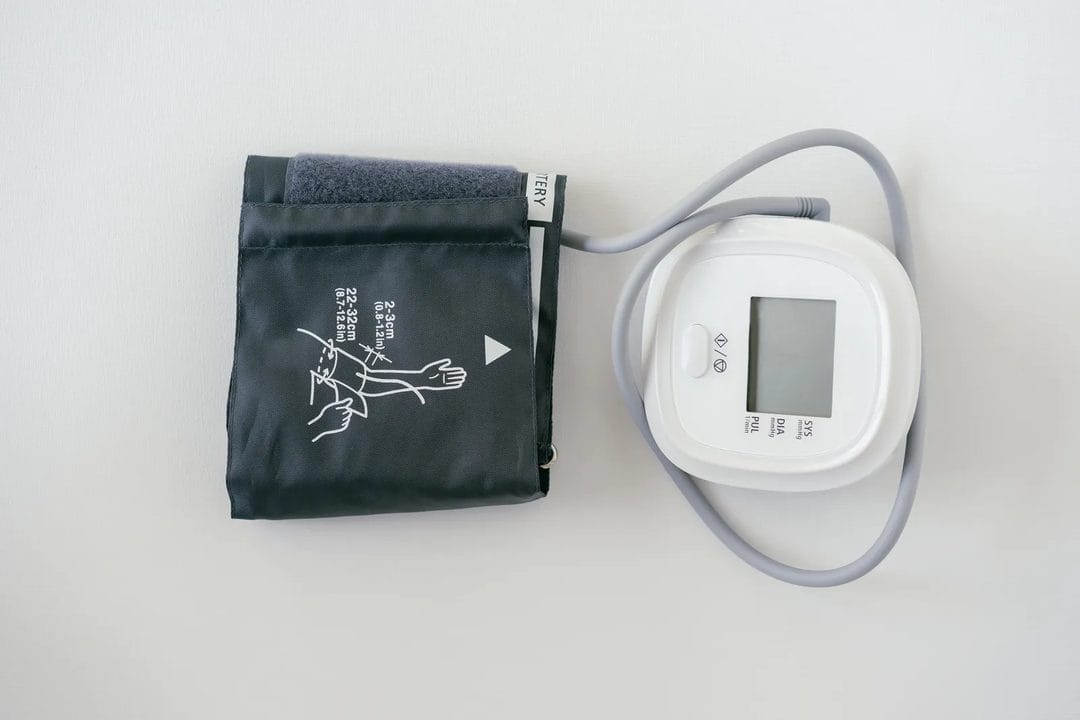
You measured your blood pressure at the Boots pharmacy on the high street on a Tuesday lunchtime and it read 148/92. Three days later, at your GP surgery, the nurse got 136/86. That weekend, on the monitor your wife bought you two Christmases ago, sitting at the kitchen table with a cup of tea half-finished beside you, it came out at 129/81. Three cuffs, three numbers, and not one of them obviously wrong.
This is one of the most common sources of confusion in men's preventive health, and it rarely gets explained properly. Blood pressure isn't a fixed number like your height — it's a moving average that responds to posture, stress, caffeine, a full bladder, the temperature of the room, and who's standing next to you holding a clipboard. A machine can be perfectly accurate and still produce a number that doesn't reflect anything close to your resting state, simply because the moment it was taken wasn't a resting moment. Understanding why the three readings diverge, and which one to trust, matters more than most men over 40 realise, because untreated high blood pressure is one of the biggest preventable contributors to heart attack and stroke risk in this age group. Most men who buy a home monitor use it for a fortnight, get one number that worries them and one that reassures them, and quietly give up trying to make sense of the contradiction. That's the wrong response — the contradiction itself is the useful information, once you know how to read it. This article won't tell you what your specific numbers mean for your health — that's a conversation for your GP — but it will explain why home monitoring is worth doing properly and how to do it in a way that actually produces useful data.
Why three cuffs give three different answers
The pharmacy reading tends to run high, and there's a well-documented reason for it. Standing at a machine on a shop floor, often after walking briskly from the car park, with people queuing behind you for their prescriptions, is not a resting state. Add in the fact that many pharmacy machines use an arm cuff sized for an average adult rather than fitted specifically to you, and a mildly inflated number is the expected outcome, not an anomaly. The clinical term for elevated readings taken in a formal setting — one where blood pressure runs higher purely because of the setting itself — is white coat hypertension, and it's recognised widely enough that NICE guidance in the UK specifically recommends confirming a high clinic reading with either home monitoring or a 24-hour ambulatory monitor before starting treatment. Some men get exactly the opposite effect at the GP surgery: the appointment itself is oddly calming after a stressful morning at work, and the number comes back lower than it would at their own desk twenty minutes later. Neither pattern makes one reading "correct" and the other "wrong" — they're both real physiological responses to real circumstances, and the mistake is treating any single number as the definitive verdict on your cardiovascular health.
The opposite problem gets far less attention, and it's arguably more dangerous: masked hypertension, where the clinic or pharmacy reading looks normal but the pressure is actually elevated the rest of the time — at your desk during a stressful afternoon, after a heavy dinner, or first thing in the morning before the first coffee has worn off. A single reading taken in a five-minute GP appointment simply can't catch that pattern. This is the whole argument for home monitoring: not that home readings are automatically more accurate, but that a series of readings taken in your own environment, at consistent times, tells a story a single snapshot never can.
Buying a monitor that's actually validated
Not every blood pressure monitor sold in the UK has been independently tested for accuracy, and the difference matters. The British and Irish Hypertension Society (BIHS) maintains a public list of validated devices, and it's worth checking a model against that list before buying rather than trusting the marketing copy on the box. Omron's upper-arm monitors — the RS series and the more basic M2 and M3 models — appear repeatedly on validated lists and are widely stocked at Boots and Argos, typically running somewhere between £25 and £45 for a basic upper-arm model and up to £70–£90 for one with irregular heartbeat detection and multiple user memory.
Wrist monitors are tempting because they're smaller and cheaper, but skip them. Wrist devices are far more sensitive to arm position — even a few centimetres too high or low relative to heart level throws the reading off by a meaningful margin — and the error rate in independent testing is consistently worse than upper-arm cuffs. An upper-arm monitor with a cuff sized correctly for your arm circumference (most adult cuffs cover 22–42cm, but check yours if you're outside that range) is the better choice, full stop.
Taking a reading that means something
The technique matters almost as much as the device. Sit with your back supported, both feet flat on the floor — not crossed — and your arm resting on a table so the cuff sits roughly level with your heart. No talking during the measurement, no phone in the other hand, and ideally no caffeine, exercise, or cigarette in the 30 minutes beforehand. Rest quietly for five minutes before the first reading rather than cuffing up the moment you sit down.
Take two readings, one minute apart, and record both rather than just the one that looks better. Do this in the morning before any medication and again in the evening, for at least four to seven consecutive days when you're establishing a baseline or checking in after a change — a single good morning reading tells you almost nothing on its own. Skip the very first day's readings when you average the week, since people tend to be a little more anxious and a little less consistent with technique on day one. And write the numbers down or use the monitor's memory function; trying to remember six days of readings by the end of the week is asking for trouble.
What the numbers actually mean — and where the nuance lives
One reading is not a verdict.
Home readings that average consistently at or above 135/85 across a week are generally treated as the threshold worth discussing with a GP, compared with the roughly 140/90 threshold typically used for a single clinic reading — home targets sit a little lower precisely because home conditions are calmer than a consulting room. That's a general guideline figure, not a diagnosis, and it's exactly the kind of number you should bring to your doctor rather than act on alone. A single high reading, even a genuinely high one, is not an emergency and does not mean you need to call anyone immediately, because blood pressure swings by 20–30 points across an ordinary day depending on stress, activity and hydration. What matters is the pattern across a week, and even then, only your GP can weigh that pattern against your full history, your medication if you're on any, and any symptoms you're having. If a single home reading comes back very high — the kind of number your monitor flags in red — alongside symptoms like chest pain, severe headache, vision changes or shortness of breath, that's a different situation entirely and warrants urgent medical attention rather than a wait-and-see approach.
Building monitoring into a routine that lasts
The men who get useful data out of home monitoring are the ones who treat it as a periodic check-in rather than a daily ritual. Measuring twice a day, every day, indefinitely tends to produce anxiety more than insight, and anxiety itself pushes readings up — a genuinely unhelpful feedback loop. A more sustainable approach is a focused week of twice-daily readings every few months, or whenever your GP asks for a fresh baseline, with the monitor otherwise sitting in a drawer rather than on the kitchen table as a permanent fixture.
Keep the same monitor for consistency rather than switching between the pharmacy machine, a mate's monitor and your own — different devices, even validated ones, can differ from each other by a few points, and that's noise you don't need when you're trying to spot a genuine trend. If you want to sanity-check your home monitor against a clinical reading, bring it to your next GP appointment and measure both arms back to back; a gap of more than 10 points between your device and theirs is worth mentioning, since it may mean the monitor needs recalibrating or the cuff is the wrong size.
When to stop guessing and see your GP
Book an appointment rather than continuing to self-monitor if any of the following applies:
- Your home average sits persistently above the 135/85 mark across more than one measurement week.
- You're already on blood pressure medication and the numbers are drifting despite taking it as prescribed.
- Your readings swing unusually widely from day to day, or something about the pattern just doesn't sit right with you.
None of that is something to work out from a spreadsheet at home — it's exactly the kind of pattern a GP needs to see in order to decide whether it's white coat anxiety, a genuine trend, or something that needs a 24-hour ambulatory monitor to sort out properly. Bring your recorded numbers to the appointment rather than a vague sense that "it's been a bit high lately" — a week of actual figures, morning and evening, is the single most useful thing you can hand a doctor trying to make sense of three disagreeing cuffs.