Grip Strength Is the Health Marker Men Over 40 Keep Ignoring
Grip strength predicts heart trouble and early death better than blood pressure in some studies. Here is what your handshake is quietly telling you, and how to train it.
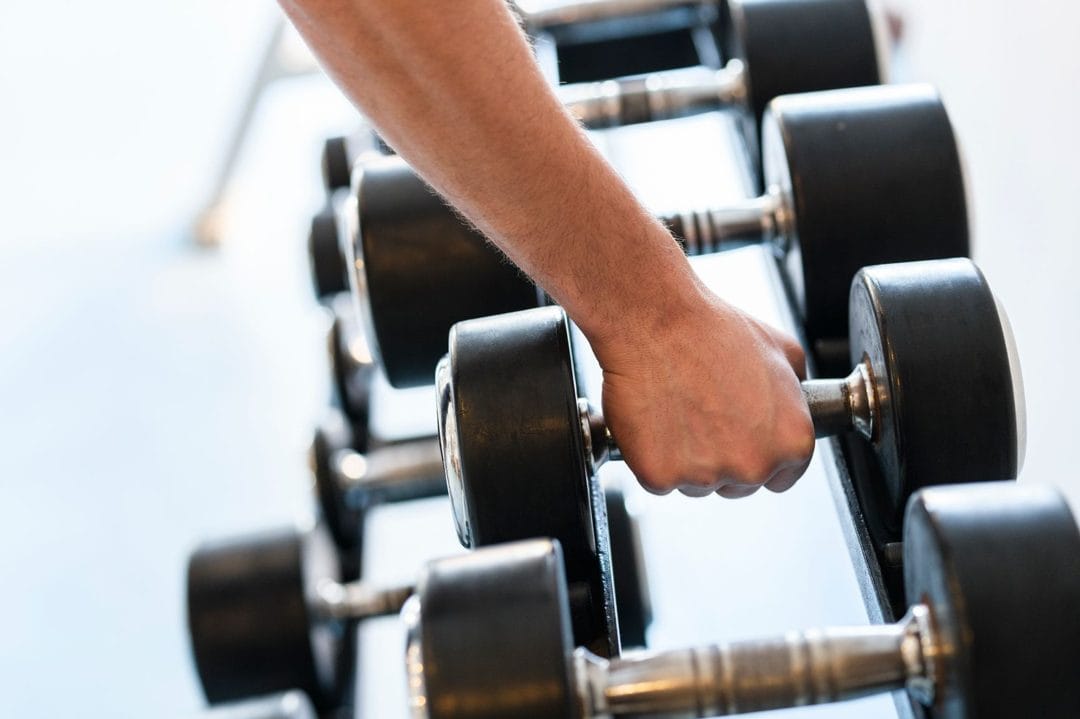
There is a test your doctor probably never runs, it costs nothing, and it takes about three seconds. You squeeze a small device as hard as you can, a needle swings, and a number comes out. That number, it turns out, says more about how the next decade of your life is likely to go than most men would ever guess.
Grip strength sounds like a gym-bro vanity metric, the kind of thing you'd brag about while opening a stubborn jar. It isn't. Over the past fifteen years it has quietly become one of the most-studied markers of whole-body health in men, and the research keeps landing in the same uncomfortable place: weak hands tend to travel with a weak everything-else, including the heart.
What a handshake actually measures
Grip strength is measured with a hand dynamometer, a palm-sized gadget you squeeze. Most clinics that bother to test it use a Jamar-style model, and the reading comes back in kilograms. You take the best of three squeezes per hand. The whole thing is over before you've finished wondering why nobody did this at your last physical.
The reason it matters has nothing to do with your hands specifically. Your forearm muscles are a stand-in, a cheap proxy, for the total muscle you're carrying and how well your nervous system can recruit it under load. When that number drops year over year, it's rarely because your hands got lazy. It's because the engine behind them, the muscle mass and the neural drive that fires it, is fading. Doctors have a clinical name for that slow fade: sarcopenia, the age-related loss of muscle. Grip strength is the smoke alarm for it.
And here's the part that gets people's attention. A large analysis published in The Lancet in 2015, the PURE study, followed roughly 140,000 adults across 17 countries and found that every 5-kilogram drop in grip strength was tied to a 16 percent higher risk of dying from any cause over the follow-up period. It tracked heart-related death and heart attack risk more tightly than systolic blood pressure did. Read that again. The handshake outperformed the blood-pressure cuff as a predictor.
Why men should care more than the charts suggest
Men lose muscle faster than they think, and they start younger than they'd like to admit. After about 30, most men shed somewhere between 3 and 8 percent of their muscle mass per decade, and the rate accelerates past 60. The thing is, you don't feel it happening. Daily life doesn't demand much from your peak strength, so the decline hides. You're not lifting your maximum to carry groceries or climb stairs, so the tank can be running low for years before anything feels off.
Grip strength catches what the mirror misses. You can hold a steady weight on the scale, look more or less the same in a shirt, and still be quietly trading muscle for fat underneath, a swap that does nothing good for insulin sensitivity, bone density, or how well you'd recover from a fall at 70. The fall part isn't abstract, by the way. Weak grip in older men correlates with worse balance and a higher chance of the kind of fracture that turns into a hospital stay you don't fully walk out of.
There's a counterpoint worth naming honestly. Grip strength is a correlation, not a magic lever. Squeezing a tennis ball all day won't extend your life, because the grip number is a symptom of total fitness, not the cause of it. Treat a low score the way you'd treat a check-engine light, as a signal to look under the hood, not as the problem to fix in isolation.
The numbers, roughly, and where you sit
Normal ranges vary by age and body size, so treat these as rough anchors rather than gospel. For men, a useful mental benchmark from the research literature is the 26-kilogram line. Consistently below about 26 kg of grip in an adult man is the threshold several studies use to flag elevated risk and probable sarcopenia worth investigating.
By age band, healthy averages look something like this:
- Men in their 30s and 40s: typically in the mid-40s to low-50s kg range for the dominant hand
- Men in their 50s and 60s: often drifting into the high-30s to mid-40s
- Men past 70: frequently in the low-30s, and this is where dropping under that 26 kg line becomes common and concerning
- And one honest caveat: a 6-foot-4 former rower and a 5-foot-6 office worker will never post the same number, so trend matters more than a single reading
The single most useful thing you can do is establish a baseline now and re-test every six months. A dynamometer that's accurate enough for home use runs about $25 to $40. If your number is sliding while your age says it shouldn't be yet, that's the conversation to bring to a doctor, ideally before something else forces it.
How to actually build it
The good news is that grip and the muscle behind it respond fast, even in men well into their 60s. The research on resistance training in older adults is blunt about this: it works, and it works at almost any starting age. You don't need a gym membership or a coach. You need load and consistency.
Carry heavy things
The farmer's carry is the closest thing to a cheat code here. Grab a heavy dumbbell or kettlebell in each hand, stand tall, and walk for 30 to 40 seconds. That's it. It loads your grip, your forearms, your traps, and your core all at once, and it maps directly onto real life, the suitcase, the bags of mulch, the toddler plus the car seat. Two or three sets, twice a week. If you only do one thing off this list, do this.
Hang from a bar
A dead hang from a pull-up bar is humbling and useful in equal measure. Just hang, arms straight, feet off the ground, for as long as you can hold it. Most middle-aged men start around 15 to 20 seconds and are genuinely surprised by how hard it is. Build toward a minute. It trains grip endurance and decompresses your shoulders and spine as a bonus.
Lift with bars, not machines
Deadlifts and rows done with a barbell or dumbbells force your hands to hold the load, which trains grip as a side effect of getting stronger everywhere. Machines with padded handles and seat belts do the opposite, they let the equipment hold the weight so your grip never has to. If you're choosing between a lat pulldown machine and a set of rows you have to grip, pick the one that makes your hands work.
Skip the gimmicks, though. The spring-loaded hand grippers sold at checkout counters build a narrow, specific squeezing strength that doesn't carry over to much. They're not useless, but they're nowhere near the farmer's carry for the time you'll spend. Don't let a $12 gadget convince you you've covered your bases.
The test worth asking for
Next time you're at a physical and the doctor's running through the usual, the cuff, the stethoscope, the questions about how you've been sleeping, ask whether they have a dynamometer. Plenty of clinics do and simply skip it because it isn't on the standard checklist. If yours doesn't, buy your own and track it yourself. A three-second squeeze that quietly predicts your odds of a heart event is worth more attention than it gets, and it costs less than a single co-pay.